We use necessary storage to make the site work. With your permission, we’d also use analytics cookies to see which pages help people, and marketing cookies to measure our campaigns. Nothing optional runs until you choose. Cookie policy
Necessary
Always on
Keep the site working and remember choices you make here, like this one.
Analytics
Count visits and show which pages are useful, with Google Analytics. We use this only to improve the site.
Marketing
Measure whether our ads and campaigns work, for example on LinkedIn or Google.
AMAmit MenghaniCEO and Head of Growth · 6 min read
Quick answer
U.S. buyers expect a new brand to speak in a local voice, know clearly what it stands for and show proof they can check. They look for pricing that shows value, a website built for U.S. visitors, fast replies and partners they already recognize. Companies entering the U.S. succeed faster when these basics are in place before spending heavily on advertising or outreach.
The U.S. is a huge market, and buyers here are used to having plenty of choice. A product that’s a clear leader at home still has to earn trust from scratch. Over the years, working with companies coming in from Europe and Asia, I’ve seen the same seven expectations come up again and again.
The seven things U.S. buyers checkGet these right before you spend on ads or outreach. Each one makes the next easier.
1. A voice that sounds local
U.S. buyers notice translated or overly formal copy straight away. Use American spelling and terms, U.S. examples and measurements, and plain language. Explain what your product does and why it matters, in the words your buyer would use.
2. Clear positioning and a brand that signals value
U.S. buyers decide quickly whether you’re premium, practical or budget. Pick one position and own it: who the product is for, what it does better than the alternatives and why it’s worth the price. Then make the brand look the part. A sharp logo, consistent colors, quality photography and well-made materials tell buyers you’re established before they read a word.
3. Proof, not promises
Claims are cheap. U.S. buyers, and business buyers and their committees in particular, look for case studies, measurable results, certifications, reviews and references they can check. Even two or three strong proof pieces change how seriously you’re taken.
4. Pricing that shows value
Buyers compare prices fast, and unclear pricing feels risky. Show prices in dollars where you can, or at least a clear starting price or package. Price for the value you deliver rather than just undercutting competitors, and spell out what’s included and the results customers get. A simple comparison with the alternatives helps a buyer justify the decision to their boss.
5. A website built for U.S. visitors
Your U.S. page or site should show U.S. contact options and time zones, prices in dollars where it makes sense, and examples that fit American customers. It needs to be fast on a phone, easy to find your way around and clear about what to do next.
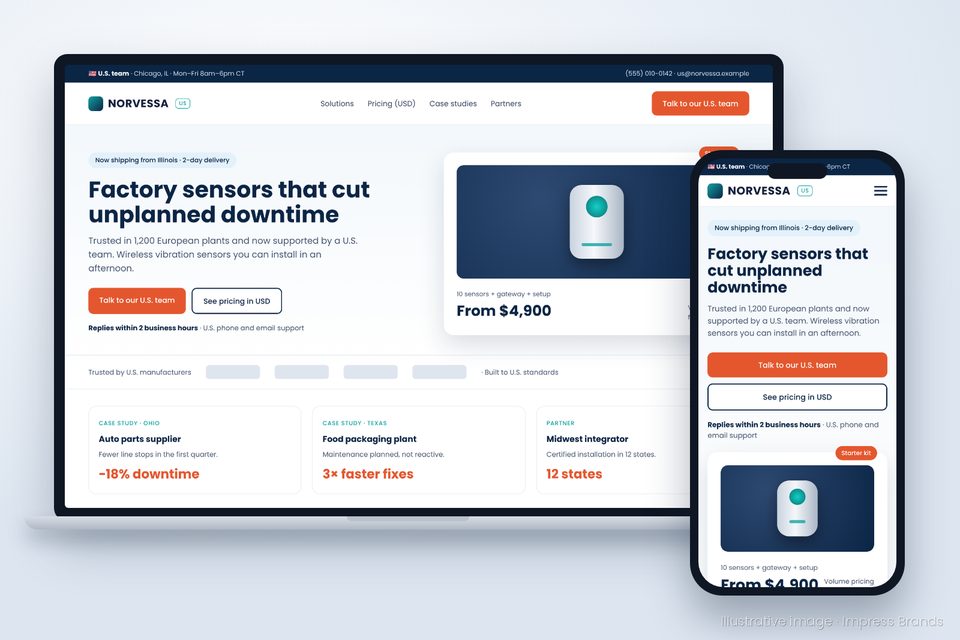
A U.S.-ready landing pageU.S. hours and a U.S. phone number up top, one clear promise, prices in dollars, a named next step and U.S. proof, all working just as well on a phone.
6. Fast, reliable follow-up
A U.S. enquiry that waits two days for a reply often ends up with a competitor. Name the person who owns responses, set a target for how fast you reply and use a CRM so no lead gets lost between time zones.
7. Partners buyers already trust
Integrators, resellers, distributors and industry associations carry a lot of weight here. A clear offer for partners, and partner relationships buyers can see, help people feel safe choosing a newcomer.
Where to start
Check where you stand first. If you don’t yet have a U.S. website, proof or someone owning follow-up, sort those out before putting money into outreach or paid media. Agree on these readiness targets with your leadership team, so everyone knows what “ready” means. Our free U.S. Market-Entry Readiness Scorecard takes about two minutes and shows your next steps.
Tip from the team
Before you launch anything, ask three U.S. contacts to read your homepage and explain back what you do. If they can’t, fix the words before you fix anything else.
Frequently asked questions
What’s the first step in entering the U.S. market?
Get clear on your U.S. positioning and build the foundations: a localized website, proof assets and a plan for following up enquiries.
Do I need a separate U.S. website?
Not always. A dedicated U.S. section of your current site can work well if it’s localized and measured separately.
How long does it take to build a presence in the U.S.?
Most companies need six to twelve months to build a credible presence, starting with foundations and proof before scaling outreach.
All images in this article are for illustrative purposes only.
Amit leads strategy and growth at Impress Brands, with 25+ years building and scaling brands and businesses across eCommerce, financial services, FinTech and print and promotional products, leading global teams. Meet the team →